Wednesday, March 30, 2011

Tooth Exraction Sore Gums Remedy

Facts about exposure. Marisa


To which I enjoy as yesterday, seeing this great collection,
today I put a link, which leads us Alejandra curiosities about this exhibition.
I also see, is also very interante KNOW, and therefore many we need someone Translat us.
Alejandra, many thanks for your work, from all those who do not leave a comment.
Would you like to know about this collection that his
owner is a single lady?
Joana Rose Quilt received as a gift the day her first daughter was born in the year 1957. Since that day, began a collection that today includes more than 1300 samples but only the characteristic of being red and white Quilts. Mrs. Rose recently turned 80 and to celebrate this event decided to donate 650 of their Quilts at Folk Art Museum - Museum of Popular Arts, City of New York.

And if you want to know more ... you read on in his blog.

Monday, March 28, 2011

Property Companies Toronto

you get surprised. REFLECTIONS OF FEBRUARY

I must admit that every time I look under Internet,
when something interesting is My Marisa , who sends me a link so I would not miss it.


But ... I do not know what happens ... I'm not easily surprised ...
I must admit ...
THAT I HAVE BEEN WITH THE MOUTH OPEN ...
you can not miss the video end of this post ...
just .... masterful.
will not know why but my red and white ... fascinate me.
be Athletic Bilbao for me hahaha.
Thanks Marisa.

Monday, March 21, 2011

Rebecca Covaciu The Mice And The

POETRY DO YOU SPEAK?

March 21: INTERNATIONAL DAY OF POETRY
(2010)
Do you speak poetry? Then
perceive the sound of my tears falling
rushed into the core of a star.

If you talk poetry
understand
I split in half when, in desire,
rain caress me, and I dissolve.

also will know what I mean when I say
hollies planted in the cracks of my field
adult, and so when I'm being.

If you talk poetry
stand by me,
I need an interpreter to understand
with people bitter.

*


All rights © Angeles Fernangómez (text and photo)

Saturday, March 19, 2011

White Sticky Mucus Stool

THE TAKI OF CHEEK AND POETRY UGO QUECHUA CURRENT / ARMANDO ARTEAGA

UGO THE TAKI OF CHEEK AND POETRY CURRENT QUECHUA

By Armando Arteaga


When faced with a reconstructive study of Quechua literature we find that it expresses a clear distinction between attributes and attributes written oral. While Quechua oral literature that emerged from the popular expressions have nothing to emulate other popular literature of any other people, literature written Quechua was in serious trouble that made it get pushed to the written literature of other peoples.

Quechua
written literature comes together with the need for a revaluation linguistics, historical restoration, cultural survival, and the dissertation as opposed to the very essence of Quechua oral literature, which is building itself open, anonymous and collective. Social status in the culture of the Quechua people leads to a common denominator of our past agraphic Andean peoples: reluctant to literature written in colonial culture. There still reads in the popular imagination: the rod and spoil. And, "rationale", the Andean culture is popular music enthusiast, the oral tradition. Although the songs and poetry of the Andean people dumb not ever lost-in fact-in the trance of orality to writing, but his spirit has been renewed recently.

This is not only inherent in the Andean peoples, is a literary stepping on indigenous peoples of the world: the poetry of the Batak, of Mangaia, the Maori, the Polynesians, the ewe, of the Ashanti, the abaluyia, the Winnebago, the ojiwa; on Yugoslav folk poetry, folk poetry in Iceland, and the popular poetry of Estonia, and even the English ballads of oral tradition of Asturias or Morocco, to name some universal cultural spaces, where poetry is once again singing. Oral tradition is an essential condition to the literature of the people, the basic livelihood for communication and the "raison d'être" of human society.

Myth "oral" is already an unfailing experience in ancient and modern societies. The magic and religion, says Malinowski, arising from emotional needs: it is the attitude that man has to cope with situations beyond their control. Supplementing the technical magic, modern man continues to invoke when it rises and travels by plane. True, Durkheim totally exclude the magic of the realm of the sacred, while Malinowski has a social relationship that has more in common with religion than with the everyday world we live determined by empirical knowledge of the properties of the objects we use, the religious man is still living in this world to face uncontrollable.


is the poetry, the literary genre that has struggled for autonomy in the Quechua oral. The syncretism between the profane and the sacred in Andean culture has a current space the upright. It is likely that in times of removal of idolatry, when the Indian chronicler wrote, the sacred hymns of the Incas were already disappearing these creations. His record in English is saved (in part), but betrayed one's own original version. Any text "published" means oral literatures, discreetly, a betrayal of the essential message of this unprecedented same collective creation.

In preliterate peoples, poetry-usually-is sung or recited, has withstood well over time: the destructive and the exogenous. Oral tradition holds the "needs inclusive" to the "collective representations." What saves the fidelity of the original poem is its recognition memory in transient memory, over time unscrupulously dumping, and put in print later. The writing loses or gains in fidelity is always hard to know. The translation into another language, foreign-is also something that transcends the fidelity of things. Literalness in some cases is unfair. We do not believe that this situation does not cease to be frustrating for the writer-narrator-Quechua-speaking, not so the poet is in favor of orality.

It fell to Jose Maria Arguedas (Taita churiyaque) have been the pioneer and have noticed this situation explicit literalness. Every translation is somehow a betrayal. Arguedas published "kechua Canto" (Lima, 1938), where poetry is in one's own voice from "Wayne" or songs that sung in indigenous communities and the haciendas of Abancay and Puquio. Arguedas here develops the thesis that in the Andean farmer: singing, music and dance is an inclusive gesture of his own life. Poetry lives in his voice, is a speaker, without limitations. Arguedas showed, always-be a great translator, a profound knowledge of the "Runa Simi" as language and the Andean world. Only a literary creator and an anthropologist at high level as it was him, attentive and knowledgeable observer delas diverse cultural manifestations of the peoples of the southern Andes, could do such a feat of translating the oral tradition.


Another passionate translator of Andean Quechua is Adolfo Vienrich (Allin rune Mallki Hatun), in his "Lilies Quechua (Tarma, 1905) assumes the existence admiringly of" Inca Literature. " Vienrich still in the observation of this literature excelsa ours. Still is exacerbated: in the situation of annihilation of the Andean culture, it is lifeless accept this condition caused by colonialism. Yaravíes collected songs and Cachua Abancay, Cuzco, Puno, the Central Sierra: Huancayo, Concepción, Jauja, Tarma, and Chupaca. His "Fables Quechua" (or "apologists Quechua, Tarma, 1941), are the expression of the highlights from our literature. Ardent advocate of the Andean culture and Quechua. Quechua is our first writer of fiction, its "fables" are difficult to discern: if these are personal creations exact expressions raised in the field. Made a bilingual edition. He was ahead of claims of "Runa Simi" as EW Middendorf who also collected "taquis" in his "dramatischer Lyrische Dichtungender Keshu-und Sprache" (Leipzig, 1891).

Another amazing record is the work of Jose Benigno Farfán who published many "Quechua texts" of Cuzco and the Mantaro Valley in the journal of anthropology at the University of Tucumán (Vol. 2, N-12). In his "Quechua Folk Poetry" (1942), JB Farfán, a professor at San Marcos, largely compiled some of the most important texts in Quechua as the elegy in memory of the dead "Apu Inka Atawalpáman, and harawi" Waqaykúskan " and the free version of the Castilian "haraye Harawi" love that song taken from the "New Chronicle and Good Government" of Philip Waman Puma de Ayala, the Indian writer, his work written by 1613.

The case of Sergio Quijada Jara is important to have obtained important texts of the communities in Huancavelica and Huancayo in his book "Songs of livestock and herders' (Huancayo, 1957), the prologue of Paul Rivet presumed anthropological interest to the literary, though in this book are in the religious intentions poem "Wamani" which is the invocation of a deity Quechua former representing the power of the earth and which is symbolized by the mountain. The relationship between man and nature is explicit, as well as the contribution of this poetry to ecology, is primarily a rural poetry, which survive pre-Hispanic ritual matters.


Quechua Two books on poetry and an anthology called my attention since the seventies. It was something that helped me to strengthen my understanding of Quechua poetry and left me the deepest emotional boost to this poem full of great cultural relics.

First, "Poetry Quechua (Cochabamba, 1947) Jesus Lara, poet and novelist, an expert on" Runa Simi. " Jesus Lara gives a very literary and attractive force towards the problems of indigenous peoples of Peru and Bolivia, their contribution internationalized the problem of Quechua poetry publish other books like "The literature of the Quechua" (La Paz, 1969), achieving more interested readers and increasing international interest by the Quechua poetry. Jesus Lara's contribution is key because in his book includes the texts of John Wallparimachi Mayta, poet, inaugurates the modern Indian poetry in Quechua, died young fighting in the wars of independence in Upper Peru, sacrificing himself on the revolutionary epic (1814), and Melgar, his poetry is restoring the old race romantic poetry of the haravicus.

Second, the book "Song of love "(Cuzco, 1956) the father Jorge A. Lira told us of a lot about the capacity and the poetic charm of "Runa Simi." Poetry is the language of man here in these "songs" some of which were given by Carmen Taripha, a young peasant, whom he also fondly recalls how Arguedas by chanting his "lyrical poems, and also be an extraordinary storyteller.

And thirdly, the anthology "Poetry Quechua" (Buenos Aires, Eudeba, 1965), selection and presentation of José María Arguedas where poems appear Andrés Alencastre "Kilko Waraka" from "Mosoh Marka" (anonymous Bolivian poet who won an international poetry competition Quechua and he never wanted to discover his name), and the same Arguedas.

Other major collectors are Quechua literature Efraín Morote Best, Oscar Nunez del Prado C., who recorded "The Myth of Inkas and Qollari" ayllu of Q'eros Paucartambo (Cuzco) and university professor Ayacucho Teodoro San Marcos Meneses (with Porfirio Meneses and Victor Rondinel) than in the book "Huanta in Peruvian culture. Quechua literature anthology "bring new voices of poets like John Ruiz Ruiz, Chantay Pumajasapi Achalmi Harahuicuj and (some of them anthologized in "Poetry and Tradition Aboriginal People" Volume I, Alejandro Romualdo), apart from having registered other texts of popular song Ayacucho.

The Resurgence period Quechua poetry begins from 1780 AD to 1970 AD from the time of the revolution Túpak Amaru to the nationalist revolution of General Velasco, which gives very insightful a long silence.

The initiator of this revival is Wallparrimachi (Alto Peru ,1793-1814). It is the first Indian poet, creator organic, supremely expressed his own voice, breaking the "English way" of poetic language. Although Jesus has made translations of his texts Lara are still concessions to the English heritage, their texts in Quechua Andean roots are undeniable, his lyricism in "Arawi" natural.

"Modernity" in the current Quechua poetry comes from the twentieth century, begins with the poet Andrés Alencastre "Kilko Waraka" passes for "Kusi Pauker" (Cesar Guardia Mayorga) and this expression of "modernity" has an extraordinary level in José María Arguedas.

Andrew Arguedas considered Alencar (Canas, Cusco, 1909-1984): "The biggest Quechua poet of the twentieth century", in reality, it is, by the attributes of his poetry and for his courage in carrying out their work as a poet Quechua, although it was bilingual. In his poem "Illimani" win in Bolivia in 1951 - the first prize for poetry. Start this opening, with his book "Taki Parwa" (thirty poems published in full in Quechua), here the poet has surpassed the granting survivor of oral folk literature to modern poetry written in "Runa Simi", such is the essential contribution of Alencastre. Arguedas realizes "ipso facto" Alencastre genius of this device was the first time a poet quechua reclamaba su propia voz en lengua propia, era un gesto subversivo que avizoraba la nueva poesía quechua. Años después Arguedas publicaría también su “Jetman, haylli”. Alencastre y Arguedas, hicieron también sus propias versiones y traducciones al castellano de sus poemas escritos en “runa simi”. Allí nació la modernidad de la poesía quechua actual.

Alencaste publicó en “Taki Parwa” su poema “Puma”, extraordinario poema del cual han hecho versiones en castellano tanto Alencastre como Arguedas. “Taki Parwa” se planteaba también el manejo gramatical del “runa simi”, la interacción semantics between "Runa Simi" and Castilian, and continued in his second book "Taki Ruru" (1964), tenacious disagreements to coexist in the modern Quechua poetry. Later the tough dilemma of coexistence of the two language language will be reflected in his latest book "Yawar for" (Blood Rain, 1972), where it still moves the idiomatic Ripper. To understand Alencastre, read his beautiful poem "Macupikcu" ("Machu Picchu"), of great poetic level.

Arguedas help consolidate this poetry with modernity "Jetman, Haylli" ("Ode to Jet") and his great "Tupac Amaru Kamaq Taytanchisman Haylli-Taki" ("In Our Father Creator Tupac Amaru" / Hymn-Song), which has also made two excellent versions in Castilian. Like, this last "To Our Father Creator Tupac Amaru", Leo House has done an excellent translation that enriches the opening to go about doing creative and authentic version of the current Quechua poetry. Arguedas also published his book of poems "Katatay" (1969).

Quechua
Another modern poet is "Kusi Pauker" (Cesar Guardia Mayorga), his books "Sonqup Jarawiinin", "Umapa" Jamutaynin "and" Runaq Kutipakuynin "express and return to the modernity of the current Quechua poetry developed from the twentieth century. His poems are expressions of current existing views, protests indubitable, as in the case of his poem "Auqay" ("War"), admirably anti-war. Cesar Mayorga Guard also published a great "Dictionary Kechwa" important tool for better understanding of the current Quechua poetry.

I think the currency in continuous current Quechua poetry, is a grievance process to overcome aspects "unavoidable" in Andean culture. Modernity not opposed to the "tradition" as opposed to reaffirm their confidence. Modernity means for poetry to move the language as a communication tool, using it more direct, in creative freedom. I think you are making other poets, as in the case of Lily Flowers, enough to read in his book "Phawaq Titi" his poem "Imap Tukuy Tukukushanñan" ("Everything is finished"), to understand your claim against the dehumanization current this stage of liberalism brutal in the world. Meeting these contributions also poets like Eduardo Ninamango, William Hurtado de Mendoza S., Alida Castillo, Dida Aguirre, and Gloria Caceres, whose contributions within the Quechua poetry are needed, too, keep in mind.


This literary fervor Quechua poetry is to find these books of poetry written in Quechua, "Yaku-Unupa Yuyaynin" ("Memory of Water" (Lima, 2009) and "Puyupa-wayrapa-ninapawam musqukusqanmanta (Huancayo, 2010), as well as" Ballad of a dog without mincing words "(Lima, 2009) and the latter" Suck Lyrics "(Lima, 2011), which form part of the poetry of Ugo Carrillo, Kuchuqmasi, Wauque, Qellqaq, musician, surprising anthropologist and poet of the Generation of 70.

In short, this part of oral legacy of the Andean Quechua Southern, broadcast songs, is the work misucal, where you can find a unique contribution Ugo Carrillo, in "Song of Cholo Foxes Up ", the result of a fruitful research and collection of music and lyrics. Carrillo also continues the tradition of Quechua texts collectors buried in the depths of our highlands and rural communities of Apurimac, Huancavelica and the Mantaro Valley. For many years, his work has been shown that these songs are kept alive the Andean culture. It's not just nostalgia for a glorious past, is committed to a future of new openings and glare current Andean culture.

Ugo
Carrillo's poetry stands on the slope of apurimeña literature. His work alternates with personal voices, ancient to modern styles converge in the proper use of the Quechua language in poetry, as the contributions of other poets and writers in the Apurimac region: Abel Gutierrez Ocampo, Edmundo Delgado Vivanco, Hugo Tello Prado Juan José Flores, Jorge Flores Ramos, Julio Cesar Sanabria Hermoza, Erasmo Montoya Obregon, Feliciano Padilla, Lily Flowers, Renee Montoya Alarcon, Alarcón Blequer Silvera, Montoya Milciades Obregon, Luis Rivas Loayza, Isaac Vivanco Tarco Samanez Luz Paz, James Oscco, Alejandro Medina Bustinza, Feliciano Mejía, Hernán Hurtado, Fredy Roncalla and Tomaylla Nile.

Ugo
Carrillo's poetry expresses a substantial change in the management of language in the current landscape of Quechua poetry, a break with the tradition of lyricism as a discourse that began to break up the direct message. Talk about the problems of the modern man and ancient past. The poems of "Yaku-Unupa Yuyaynin" ("Memory of Water") are dedicated to the pope, no one before had dedicated poems or poetic speeches of praise and gratitude for consideration with this native tuber that has saved humanity from hunger. There are many anonymous voices that celebrate the merger of the potato (as heroic creation of the Quechua) all sincere expressions of our culture and even a "lliwqa" sings the fertility of the land against the destructive process which is currently subject to adverse economic and political interests.


's poems "Puyupa-wayrapa-ninapawam musqukusqanmanta" assume in part the anti-official discourse against marginalization and lack of historical perspective touting certain anti-democratic sectors face the problem of the Andean people, and our multicultural and multilingual country, does not agree to exclude poetry in "Runa Simi" as the "other" poetry , set aside. No, Quechua poetry is as important as poetry in Castilian, the poetry in "Runa Simi" has its own cultural context, substantive, comprising almost the entire national territory, has mitimaes everywhere. Have tenderness, has historical legacy, not in vain Ugo Carrillo cited in his poem "Wichay Nanpi Isaakpa yuyaynin" heroes of popular exploits Juan Santos Atahualpa, Tupac Amaru, a Willka Rendón, nothing less. In "Way, haykapkamaraq simpayki" in which the merger between the two cultures and two languages \u200b\u200bis synchronized between their own verses to bring out the poetic meaning of admiration for untranslatable by a red flower, symbol of the tenderness of the mother, Women of the earth. O, the horror in "Aya wayra" man's body into the wind.

Finally, I would say, the excitement that I wake up these two books Ugo Carrillo: "Ballad of a dog without mincing words" (see "quipukamayoq" of Uranmarca) and "Suck letter" (it is because his poetry remains an important area of \u200b\u200bour poetry, line of Efraín Miranda, Cesario Martinez, and Gamaliel Churata, poets of the current Andean consonant. Though, in truth Ugo Carrillo, "Jamauta, thoughtful man, has been added to this overwhelming" Sanampay ", signaling poetry has always be-too-one of the most vital poets of the Generation of 70. rejoice. Kusikuy, Chamay.


Conference and Presentation of the book-wayrapa-ninapawam Puyupa musqukusqanmanta "
Ugo Carrillo in the Association of Quechua-speaking and Quechua-Ica lovers.
Ica, Thursday March 10, 2011.

Thursday, March 17, 2011

Sample Church Letters For Anniversary

.

I publish my part and more than once a month ...
now your turn to open up a blog.


Luz Marina
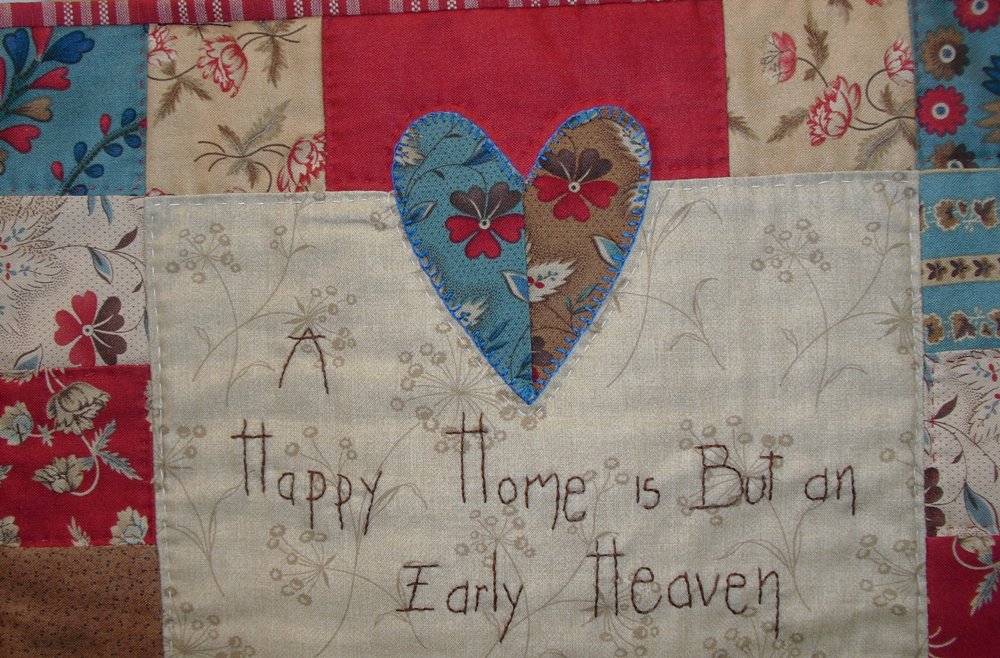
few months ago he sent me this batch of fabrics
and told me he remembered me.


HOPE is the collection, Hope in English.

saw when he opened the dark ... not ... difficult.
But ... on Saturday said ... Hands. LOVE ME
.

Now this mini quilt remind me of you hahaha.


The truth is that I had not really wanted or ideas to ponder.
But this morning I saw a thing ...
which I'm mulling over his head.

Reflections of February.

WHAT I LIKE
And
WHAT I DO NOT LIKE THE BLOG .
  • If I like blog, the people of the blog, and I can watch a ratillo when more and more blog.
  • not believe (or I would not believe) in malicious forethought.
  • not understand a tantrum "trumpeted" because it put a photo of your handiwork, in another blog when it has indicated its origin.
  • If I think it's easier to talk before.
  • not like me cliques.
  • If I like chicken coops, the more chickens better ... and if there is a handsome cock better.
  • not understand a comment dismissive, abusive or malicious in any blog.
  • FORGIVE not one of these comments, a blog is for me pure inspiration and should be for everyone.
  • If I like the new blog, which have almost no work, those who begin, those lo más importante: ILUSIÓN.
  • Si me encantan las "novatas" y las dudas de las novatas... porque todas fuimos novatas y todas tuvimos esas dudas. Y alguien nos las solucionó.
  • Cuando una entrada tiene dos opciones de comprensión, no me gusta la solución oscura... Si me gusta la verde o amarilla.
  • Me encantan mis 75 chicas sampler ...
  • not stand the ranking of reviews, here we should not measure the audience and Antena 3 and Tele 5.
  • If I love your comments, every day I look to see if there is a new ... hahaha.
  • If blogs I love watching the Australian, French, different designers, Americans, Italians ...
  • But ... fascinate me Argentines, Peruvians, Mexicans, Chileans, Colombians, Venezuelans ... all working without collections, creating with fabrics at home .. who make home patch.
  • I also love the glamor ehhhh patch. I pirri all work done with beautiful collections.
  • believe that when I pick a collection of fabrics and do a job ... and I have a 60% guaranteed job ... if I do something nice is to kill me.
  • I think it's very easy to work with collections.
  • And I think the blog are to share, copy, to learn, enjoy, to display and to provide good experiences . The bad and bring disease.
  • And that each should contribute their grain of sand ... or whatever you can.
  • And if something in an entry not see it right .. or has it gone bad ..... Talk to him. It is much easier.
I'm going to sew ....

Tuesday, March 15, 2011

Menstruation With Soft Cervix

MOM! (Story)

(2004)
MOM!
"Not if ..., I tell ya!, Look at him there, loll on the couch, and come football and more football, give you hit the remote. Ah, but ... Can not you move a little rennet to see me? Can not you see that I supply?
No, if not look at me. If you ...! But are you listening to me or not?
- What?
- And that is not enterao! Set the table, man, do something, you're brutalizing. If you do not do anything else since you get home, that neither you take care of the boy and eventually we will make some angry, you'll see, but you and you will learn nothing, why? I do not know what you are made of men. Look, one day I pack up and leave. And there you stay!, To see how you get by alone. I do not care, I took the boy and stay with everything if you want, especially TV, of course, that since Plus you join the that, I got sick. No, if I'm buying one for me alone, I put in the room and see what my I please. Or not, you go there you better. Let's see if I will not be able to sit on the couch, (which is what I like to me when I just pick up everything) and see what I want, not what you will suck, always seeing those guys running after a ball. Well son, could give you each one so they do not fight because I do not know what you see to that. To me it seems a bore. But you, of course, think I'm stupid because I do not understand that. I do not want you know, or want. Why is my face is stupefied like you?, then go!
- Hush, hush! Cagüeeeeennnn!, Fuck, shut up a bit, woman!
"If it's over you can not even speak. Know that your son says he does not understand fractions, and you could help a little, it will suspend the Math-in instead of being there without Plant we find out about others and doing nothing. Ah, but what güevazos you! Of course you do know how you, if you do not even catch sight of the belly misses you drink as much beer and board seat with her ass on the couch.
"Hey, without missing eh?
- "Without missing? "Without missing? Today, because I have the tortilla half done and I will not leave them alone, but tomorrow ... tomorrow I will make you dinner if you want to go to bed supper, for I of the boy and mine, and you they give you. You no longer take it anymore.
- Oh, shut up already, damn! Damn, this referee is comprao me the fucking shit. ..!
- See? See how raw you gone? Well, you were, but more. If at the end you will end up like your grandfather, who in addition to mean and selfish, was the most gross of the people. Or do not you remember what your aunt had always Patro? When the goat that gave gored in the head, and your grandfather raw wound was measured, then grabbed a knife, went to the goat and made a breach in the same place and same size as the yours. No, if ... I'll wait for you!, Like father ... like son!, You know.
"Look, if you keep this up I will inflate the balls and go to the bar.
"Well go and not come back, you do not miss anything. But do not you go, no, you're more comfortable here. Of course I do not know which is better, because when you were younger and had not so much guts, you and me pegabas starts with the first, or is that not what you remember of that Charo. No, if my own that I have not been Olvidao, no, I have it that well, but well clavao here. Do not know why I married you. And now, you see, do I have fine cross, my God!
"But what are you talking? Come on, shut up a little, you're prettier.
- And above tells me out! Let me come me! Will bastard! Well I will not be silent no, I'm already tired of silent. And all I'm tired of it and I have no desire for anything, that thou hast Take off, because you're a selfish y. .. And you know what I mean?, I'm going to bed, that there remains the tortilla and you end up if you want, because the boy and gave him dinner before, and I do not need or dinner or anything, and I have been take off your hunger. And you stay watching football, then basketball and then what you please, that I am not the slave of anyone you know?, and less of a shit like you is not worth pa anything because if I want and I have them you know, so you do not me and my miss you. I go right?, I'm going to bed. Look, look, look how I'm going. I go see? See? I'm already going, look.
- Well!
- What do you good? Hello? "That's all are you? Hello? But is the uncle bud! 'Well, he says,' Well, well good! And it is so comfortable. If you're an insensitive, and I give a shit, I want to die, and not take it anymore. Look, I go to bed, yes, I have no strength and gives me all the same, and I also sleep very well with all these pills I'm taking the whole bottle I take to avoid waking and hear you snoring over. Everything, looks, everything, everything! Everything!
- What are you doing? Are you crazy? Removes
there
-man, now I have tragao me, so fuck you!.
brings p'acá
"But, hell, what have you done? Would you have taken the or not? Yes
- Vomítalas, dammit!
I do not want.
-O you get you fingers, or I'll put you of.
- You? Go look, but if you moved your ass and everything.
- You are an asshole, or what? What goals you have told your fingers!
- No!

"Daddy, what happens?
- Carlitos, fast, call an ambulance!
- What?
-The phone, son, bring the phone.

- Mom!
- Car-li-iii-ing!


All rights © Angeles Fernangómez (text and photo)

Monday, March 14, 2011

Period Pains 40 Weeks Pregnant

HUMBERTO Vinueza / POEMS

THE GUAYACAMAYO

virtual magazine of poetry Ecuador and Peru since the 70's to today.


* POEMS OF HUMBERTO Vinueza

Ecuadorian poet and writer Humberto Vinueza (1942), in the early the sixties belonged to the cultural vanguard group Tzántzicos. He has served on editorial boards of leading literary magazines of the country (Pucuna, scarf del Sol, Procontra and Letters of Ecuador, the Ecuadorian Culture House), has published books of poetry as a Cantor Gallinazo Under a sun of the dog (Quito, Populibros, Editorial Universitaria, 1970), Poet Your Word (Quito, editorial El Conejo, 1989), Alias \u200b\u200bLumbre of Riddle (Quito, editorial Eskeletra, 1990), Times Higher (Quito, the editorial author edicióndel El Conejo, 2001), and Constellation instinct (Quito, Editorial Casa de la Cultura Ecuador, 2006). In 1991 he received the National Prize for Poetry by Jorge Carrera Andrade Alias \u200b\u200bfire poem-book of riddle and the same award in 2007, Constellation poems by instinct. His poems reflected in national anthologies and Latin American English in the original language and translated into English and French.


AROUND THE moon as a sign
attempt learning a gesture
root to be doing summary outline.
The skin is abbreviated into things
extends eye and thread density joining peer
and moving
with starry nights membrane
climate chaos hugs fingerboard
accuracy of corners with words that play
to be transcendent no more than once looked
returns the threshold of the invisible world
wait may not be his double to relieve him
and appears only where it meets the mud to the sky
then the balance will not be a palmist method
but the unit of measurement for any short
the door creaks when opened
and closed cracks.


BARKING DOGS.


The voice-
melts under the name of the radio
causes no fire.
much this yesterday. How yesterday now.
The wind is again air and wind blowing
and climate
clock and the invisible hand of the principles and purposes
stripped of all artifice to nudity and refines
the pace of appearances from intimate sacred
to know invented by its fire.
off the radio. The dogs are cleared
a clear landing aircraft.
woman's silhouette shrinks on that tiny Tues
hyperbole and said tenderly:
maybe another thought I think
another mouth as his bite I focused
paused or evokes in gustation. Compasses
bodily desnortan
a bend in the language.


the rain UNDER the black night couples
frogs croaking frogs tempting odd.
He writes verses to decouple quiet time
the door and the door of desire
and between pages and sheets are hidden
carnivore lightning and rain wet with syntax diversion
air from the cave where no one goes without the smoothness of faith into the darkness of the emerging frontier.
age sex gives confidence retarded
and burns like a lamp on the edge of successive pantomime
transfusion time
who invented the first song so infinite modulated ago
neurons of the flute with holes instead of flash to believe that living the dream in the mirror into things.
Fly a butterfly from a chest
to the genealogies and sketches do not know where the soul begins where it ends the body.
couple is the only word or warmth
bird does not replace an advantage to their presence.


the book "energy drain"
Published Work true, Anthology (2009)


Illinois Homemade Trailer Title Cost

Arguedas

MEETINGS Arguedas:
TRIBUTE TO CESAR VALLEJO - THURSDAY, MARCH 17 7:30 PM


2011: Year of José María Arguedas, the writer of mixed


Arguedas MEETINGS AND SUTTP

PRESENTS

VALLEJO UNIVERSAL


CONFERENCE

"The lyricism inclusive Vallejo

Hildebrando Pérez Grande


POETRY

July
Nelson Rafael Alvarez Bernardo Armando Arteaga

MUSICAL EXPRESSION

Avelino Rodriguez
July Humala
Margot Palomino


Thursday, 17 March - 7.30 pm

Auditorium Union of Workers of Telefonica del Peru

Lima Av Uruguay 335

FREE ENTRY

Tuesday, March 8, 2011

How To Create A Grecian Hairstyle

MARCH 8: When we call "day of celebration? - (Poem: "BLANCAMIELES POET)

MARCH 8: International Women's Day "
the moment, this remains a day commemoration, reflection, demands for equal rights for both sexes.
When we get make day of celebration, and will not need to have a day dedicated to women. That day we will have achieved a lot both women and men.
Thanks to all the women involved that this is a fact.
very special "Thank you to all the men involved, you do too.

(2006)
POET BLANCAMIELES

Blancamieles was numb lyric verses current
which flows into the poem
leading to the poet
flowing into poetry.


And there is growing and heated

; and evaporated
it rains and is reborn.


creative Blancamieles was in a coma.


The apple of witches, madmen, of fools ...
plugged-verse area of \u200b\u200bwhite matter-gray muzzled.
only at intervals
-Doze and neglect of sorcerers, "gasped
apprentice poems.


The satans circus watching the ballot box were transparent. Costumed
princes kissing on the mouth Blancamieles,
did not escape his verse of lethargy.


Embraces the brave princes
also failed to awaken the muse full Blancamieles,
almost canceled,
satans of witches.


In an interlude of hugs
woke poet herself,
alone,
living
I looking in his faded, his
,
alone.


No sour apples, no princes
satans,
without witches, princes
not brave.


She
her
for her.


Blancamieles snowy,
Blancamieles sweet
Blancamieles verse
; poem
poet,
; poetry.
Blancamieles river of words.


When they returned the hugs,
poet had emerged,
was reborn from its remains anesthetized.


He hated apples.


.
All rights © Angeles Fernangómez (text and photo)

Friday, March 4, 2011

Lip Piercing Infection Bump

DIE IN FILM unpredictability

DIE IN FILM

(2006)

When people die is not put before you to say nice things to have at his side, no. I have already noticed that this only happens in movies. In the film, I have it checked, "if they hit a shot-for example-and have a friend beside you hold the neck while dying, the dying leaves instructed the friend to tell his wife and children how much you've always wanted, that will continue trying, to take care of them from the other world ... and who knows what else. It also says, as if nothing happened to him than knowing you have only a few seconds or minutes of life, but nothing else as if the pain had nothing to do with the head or with your voice.
But I know that's not true because I've seen two people die and are not eager to talk in those moments that people will hurt all and is not for nothing, no.
The first thing I saw was my grandfather. A few days before I do not know what gave him the lead and stayed alelao. The day he died, he died and that's it. I remember very well because I had always thought that before dying, I hold her hand like in the movies-and I say, "Sebastian, the collection of old coins I want is for you, for helping me sort it." Then I cry and I kiss on the forehead. Him, after stroking the head, open the drawer of the table and would give me the treasure. But it was not. I'm not saying I do not cry for my grandfather because if I cry, but the old coins I have no idea where they went.
I also saw how the guy died Felix had long been ill in hospital. When he died I was so sore that you could see a mile off that he did not want to say a word (or could not). I could see he was dying because he wanted to take him home to spend the last days he had left and I went with my mother to see him and ...
why I say that this only happens in the film. In a movie I saw that he was dying he asked his girlfriend to marry him and everything. I think that I can pass for real. He was still smiling as the tears of the bride in her mouth and fell over his face. So things are not in the real world.
my cat also died but do not know how it happened. And I'm glad, because it could not stand it I could not even looking.

I'm too young to have seen all this, I know, but, as my mother, " by hache or Be , this guy must always be put in all fregaos."
When my mother saw Felix was the guy he was, he sent me home, but I did as I was and I was leaning out the door looking through the crack in the hinges. They, as were his, and they noticed my presence. But I'm not scared.
Of course, I learned to make better life and not wait until the last moment, so I told everyone what they intend to leave if something happened to me. And Bea, my girlfriend, I always say that I love, will not be that then do not give me time.
And that film is film, but life is another thing.
*

Video for a comment Amador Muñoz on this post.

All rights © Angeles Fernangómez (text and photo)

Thursday, March 3, 2011

Cute Cheap Skirts For Women

GROUP MEETING EARLY MORNING / ARMANDO JOSE MARIA ARTEAGA

THE GUAYACAMAYO
Virtual Magazine Ecuadorian and Peruvian poetry from the 70's to the present .


http://poesiadelatinoamerica.blogspot.com/

*

DAWN GROUP

By Armando Arteaga


ever talking to the Ecuadorian poet Jorge Enrique Adoum, told me that another poet fellow countryman Galo Rene Perez, Dawn Group, had written an essay on the poetry of César Vallejo. JE Adoum and Galo Rene Perez, had performed the obligatory young bohemia of poets in the cities of Quito, Guayaquil and Cuenca, in his "crazy" time college students. Had been activated and published literary magazine "Morning", which later will be named the Dawn Group, that is as Cristobal Garces Larrea has joined the agency on this group of poets in his famous "Morning * Poetry Anthology."

Poets Group Madrugada as shown are from all regions of Ecuador, although the poetic events of his magazine "Morning" was in Quito, as were also the journals, "Elan" in Quito, "Hontanar" in Loja, and "Us" in Guayaquil. I turn now to give some impressions on my reading of some of the poets of the Dawn Group.


Adoum.

start by César Dávila Andrade, who was born in Cuenca in 1918 and has worked matters very close to my personal experience. Texts such as "Ode to the Architect (Quito, 1945) and" Space, I have overcome (Quito, 1946), have special consideration for my (professional default). Some of his poems are clean writing as "Penetration in the mirror", which are flashes of a gamble of our Latin American language, facing our useless provincial narcissist, who often have led to awkward contradictions, mistakes vain. Owner of strong language, single parent Andean current protein man, engaged in various social deprivation, to understand this poem of unity and integration, so rash that looks like a report from the unrestrained rage "and chose the Bulletin mita, where so many names and so many stories so close to our nearby sister countries, similar scenes of real life. I've always felt Dávila Andrade's poetry close to my truth.

poetry Alejandro Velasco (Guayaquil, 1920), I have always carried the smells, tastes and aversions, of everything that has to do with the region of Guayas. His "Journal of Guayas" and "Romanceros Guayas," I have always awakened to the reality of this latitude Hispanic. Che, observed as a jaguar, or Eloy Alfaro, the old fighter, seen also as a simple man who was watching the sea, simply, a rebel with a cause.

In short, I could speak tonight of other poets such as Tomas Pantoja, Eduardo Ledesma, Enrique Noboa Arizaga, Miguel Augusto Egas, recognize in this "dimension of absence. " Say that I admire the poetry of Galo Rene Perez, vallejiano, embarrassed call sudden image. The "Insomnia" by Edgar Ramirez Estrada I was nothing unusual. "City Night" and "foreign offices" of Rafael Diaz Ycaza have always been my bottles into the sea. In the "dust wounded" Basin later discovered a poetry of Eugenio Moreno Heredia, full of mystery and humanity. As I like the "corridor" Cuenca, I am follower good time for poetry Jacinto Espinoza, and Efrain Cordero Jara Idrovo, often venturing into the salt intact, as well as "The Night Estevan" of various depths has also shown us the poetry of Theodore Vanessa Andrade. You see, my spirit Piura, I have always "up early" to read the Dawn Group, to hear the echo of the persistence of his poetry.

Adoum

Finally, I made this Bibliography * about Dawn Group as a testimony of my respect and admiration for the Dawn Group, for the systematic studies complex on this important segment of the Ecuadorian poetry. But not end without saying goodbye, saying that as a solar man of these days I too have dreamed of "Between Marx and a Naked Woman." I've told him personally Adoum poet, who somehow has always left me this "hunch" on the urgent need to raise my "be desangustiante", this fever caused by the warmth and sincerity of the words which we communicate. To understand, finally, that we are brother peoples, who are after all only one thing: poets. Let me remind Manuela, as I journey through the "wheel" of the words:

golden Sleep unguarded,

site of my next battle. Like sleeping

the continent: love at rest, back

animal in the foam.

(If that night
mellow night
Jamaica hammock-the stab in the dark

profile I had found the heart, I would not have

found, and only have been disappointing

incomplete corpse, half-killed .)

But tonight, you face down-horse galloping to the submission

tearing apart the brakes-

leave me your hard pink cleft

no danger, and my destiny in you takes place. You face up

-ship that attacks against its bow

unfair wind-

trust me your hair cut water and not make peace:

I know that both the mainland and girl, are not retreating

: accumulate riots in the dream,

no hurry to be fed sites , blood handcuffed,

and fighting break out asking for more breakfast. (...)


Outside the city and I still

waive its glow under your tongue.
look triumphant and hostage
your camp: there I

thigh joins your band faithfully

and urgent, and bites me your name:

occupation of a holiday goodbye.

The story was in the suit, lying

night in a chair, but I just want naked

name that you hear with your mouth,

only two navels flashing statue

and the map of veins where I lost.

morning's count in

decorations we left the night with their biting,

cover with the usual stripping my shirt, dress me

of lonely, widowed, single,

and give me back the other ( I forgot last night

of abstinence when entering a phone rings), and niéguenme

phone open, let

your way, redo with a single back.

And may I go out each day, Monday, to complete

freedom between the two, just started intercourse.


And poets, we got up early, always-at dawn, on the respect for freedom and a better way to live in peace, understood in a sincere friendship and poetry, always . Thank you very much.


Adoum.

* Bibliography Dawn Group:


DAVILA CESAR ANDRADE (Cuenca, 1919-1967)

Poetry: Ode to the architect (Quito, 1946), I have overcome Space (Quito, 1947), wild Cathedral (Caracas, 1951); Bulletin and elegy mitas (Cuenca, 1956); arc seconds (Quito, 1959), in an unidentified location (Mérida, 1963) and ground connections ( Caracas, 1964), The Haunted cortex (Caracas, 1966); real matter (Caracas, 1970) Love Poems (Caracas, 1972). Story: Abandoned on Earth (Quito, 1952), Thirteen Stories (Quito, 1955), Cabeza de gallo (Caracas, 1966), Collected Works (Cuenca, 1983), Poetry, Fiction, Essay (Biblioteca Ayacucho, No. 191, Caracas, 1993). Anthologies: The new story Ecuador (Quito, 1951); Sample twentieth century poetry Cuenca (Cuenca, 1971), Anthology of narrative Ecuador (Quito, 1973), Anthology of the story Ecuador (Lima, 1974), The Elan and great voice (Guayaquil, sf); Dawn: An Anthology of Poetry Ecuador (Guayaquil, 1976); Lyric contemporary Ecuadorian (Bogotá, 1979) Live Poetry Ecuador (Quito, 1990), the word lingers (Quito, 1991); So on earth as in dreams (Quito, 1991); Stories Hispanic / Ecuador (1992), I count on you (Guayaquil, 1993), Anthology of modern English poetry (Caracas, 1993) Twenty storytellers Ecuador (Quito, 1996); Basic story anthology Ecuador (Quito, 1998).

ALEJANDRO VELASCO (Guayaquil, 1920)

Poetry: New Earth (Guayaquil, 1952, P. Aurelio Espinoza Polit prologue); The Alfaro (Guayaquil, 1975 , a long poem with the heroic figure of Don Eloy Alfaro), Ballads of Guayaquil (Guayaquil, 1975). Journals: Journal of Guayas.

PANTALEON TOMAS (Guayaquil, 1920)

Poetry: Let the hate dies (Guayaquil, 1949) Blood Riven (Guayaquil, 1959). Anthology: Our Youth Poetry (Guayaquil, 1953)

EDUARDO LEDESMA (Loja, 1920)

Poetry: The Death Signs (Loja, 1947); Blood Memory ((Quito, 1955), people without Truce (Quito, 1955).

ENRIQUE NOBOA Arizaga (Canar, 1920)

Poetry: Epic of the martyred people: three songs to Lidice (Cuenca, 1944); Orbit illuminated word (Quito, 1947), Field of Love Ethene (Cuenca, 1948) Captive Images (Portoviejo, 1961), Residence and profile of the track fruit (Quito, 1963) Biography Atlantis (Quito, 1967).

MIGUEL AUGUSTO EGAS (Guayaquil, 1923)

Poetry: Pain Inside (Prov. Gold, 1975). Magazines: Bills Guayas Ecuador and notebooks.

GALO RENÉ PEREZ (Guayaquil. 1923)

Poetry: Poems of October (Quito, 1946); Magazines: Galo Recalde founded the magazine "Morning" . Essays: Desvelo and fro of the Navigator (Quito, 1949), Cesar Vallejo, American poet (Quito, 1956); return trip (Quito, 1958) Five Faces of Poetry (Quito, 1960) Whitman Living Poetry "( Quito, 1966), and Thought and Literature of Ecuador (Quito, 1972).

EDGARD RAMIREZ ESTRADA (Guayaquil, 1923)

Poetry: Song of the Perfect Getaway (Quito, 1947), Collapse (Guayaquil, 1969); With outside skin (Guayaquil, 1970), and by the walls of the funnel (Guayaquil, 1974).

Ycaza RAFAEL DIAZ (Guayaquil, 1925)

Poetry: Sculptures at Sea (1946), Logbook (1949); The keys of the country (1954), The Return and Dreams (1959); bottle into the sea (1965), Forbidden Zone (1972), Signs and passwords-anthology-(Guayaquil, 1978) High tides: songs and elegies ( Guayaquil, 1993). Novel: Faces of Fear (Guayaquil, 1962) Prisoners of the Night (Quito, 1967). Story: The beasts (Guayaquil, 1952), The angels wandering (Guayaquil, 1958), Tender and violently (Guayaquil, 1970) Porlamar (Guayaquil, 1977); Porlatierra (Quito, 1978) Prometheus and other young faces at (Quito , 1986). Anthologies: The new story Ecuador (Quito, 1951), Thought and Literature of Ecuador: critical anthology (Quito, 1972), Anthology of narrative Ecuador (Quito, 1973) contemporary Ecuadorian Story (sf); Dawn: An Anthology of Poetry Ecuador (Guayaquil, 1976); Lyric contemporary Ecuadorian (Bogotá, 1979), Ecuador Live Poetry (Quito, 1990), the word lingers (Quito, 1991) On Earth as in dreams (Quito, 1991), I count on you (Guayaquil, 1993) basic story anthology Ecuador (Quito, 1998) Ecuadorian Story the late twentieth century (Quito, 1999)

EUGENIO MORENO HEREDIA (Cuenca, 1926)

Poetry Caravan of the night (Cuenca, 1945), Cry of the Wounded Powder (Cuenca, 1949), Poems of Peace (Cuenca, 1956), Baltra (Cuenca, 1960), Poems for Children ( Cuenca, 1963), Ecuador, Padre Nuestro (Quito, 1968), Anthology (Cuenca, 1975). Magazines: Altazor and Elan (Cuenca).

JACINTO CORDERO ESPINOSA (Cuenca, 1926)

Poetry: The Song of Destiny (Cuenca, 1948) Poem for the Son of Man (Cuenca, 1954 ) Stripping (Cuenca, 1956) and Turning Parent (Quichua translation of Manuel Muñoz Cave) (Cuenca, 1956).

EFRAIN IDROVO JARA (Cuenca, 1926)

Poetry: Letter Soledad Inconsolable (Cuenca, 1946); Traffic Ash (Cuenca, 1947); Face of Absence (Cuenca, 1948) and Two Poems (Cuenca, 1975).

TEODORO VANEGAS ANDRADE (Cuenca, 1926)

Poetry: Season of the Abyss (Cuenca, 1949) Location of Man (Cuenca, 1951); Three poets Ecuador: Jacinto Espinosa Cordero, Heredia and Teodoro Eugenio Moreno Vanegas Andrade (Cuenca, 1965), and Signs of Erranza (Quito, 1969). Novel: The Night Estevan.

Jorge Enrique Adoum (Ambato, 1926)

Poetry: Bitter Ecuador (Quito, 1949) Notes of the prodigal son (Quito, 1951), The Notebooks Land: I. Origins. II. The enemy and the morning-National Poetry Prize-(Quito, 1952); III. God brought the shadow Casa de las Americas Prize-(Havana, 1960). IV. The golden night Occupations (Quito, 1961), Story of the alien (Quito, 1953), Notes of the prodigal son (Quito, 1959) I went with your name for the Earth (Quito, 1964) Staff Report on situation (Madrid, 1973) are not all that are "personal anthology-(Barcelona, \u200b\u200b1979) Time and the words" personal anthology-(Quito, 1992) unearthed Love and Other Poems (Quito, 1993); Anthology (Madrid, 1998); ... Neither are all that are "personal anthology-(Quito, 1999). Theater: The Sun under the feet of horses (Quito, 1972) and The Rise to hell (Quito, 1981). Fiction: Between Marx and a Naked Woman "Award Xavier Villaurrutia "- (Mexico, 1976) without Angel City (Mexico, 1996), The Loves shooting: reports imaginary (Quito, 1997). Essay: Twentieth Century Poetry (Quito, 1957); The great literature of Ecuador 30 (Quito , 1984) unambiguously (Quito, 1989) Live Poetry-anthology Ecuador-(Quito, 1990), Ecuador: particular signs (Quito, 1997); Guayasamín: man, the work, criticism (1998), Looking everywhere (Quito, 1999). Anthologies: Dawn: An Anthology of Poetry Ecuador (Guayaquil, 1976) Live Poetry Ecuador (Quito, 1990), the word lingers (Quito, 1991).

GARCES LARREA CRISTOBAL (Guayaquil)

Essays: Three Poets Ecuadorians: Angel Medrano Silva, Jorge Carrera Andrade and César Dávila Andrade (Bogotá, 1950 / Buenos Aires, 1956), A Vision of Poetry Ecuatoriana (Merida, 1960); Anthologies: Narrators Central, Cubans, Colombians, Peruvians, and Brazilians (Ariel, Guayaquil, 1974 and 1975); anthologies: Poetic Voices Ecuador (Publication of Horace Hidrovo Peñaherrera, Portoviejo, 1975 .) Group founder Madrugada. Magazines: Madrugada, Journal of Guayas, Ecuador, and Poetry.

(Congress "Current Ecuadorian Literature", University of Loja, Education, Loja: 3-5 April 2001).

Adoum.